Multi-Temperature Delivery for Care Homes — One Delivery, Every Temperature Zone
Fresh produce, frozen goods, chilled lines, ambient pantry items and non-food essentials — arriving on one delivery, in temperature-controlled compartments, on a single invoice. Less admin for your office, fewer interruptions for your kitchen, one number to call when something needs attention.
A care home kitchen running on three or four separate suppliers spends real time every week unpacking deliveries, signing for goods, reconciling invoices, chasing missing items and dealing with separate stock issues. Multi-temperature single-supplier delivery isn't just convenient — it's hours back into the working week for the chef, the catering manager and the bookkeeper.
The standard our care customers expect: every food category arriving in one vehicle, in the correct temperature zone, on a delivery slot that suits their kitchen, with one delivery note and one monthly statement.
Four Temperature Zones, One Vehicle
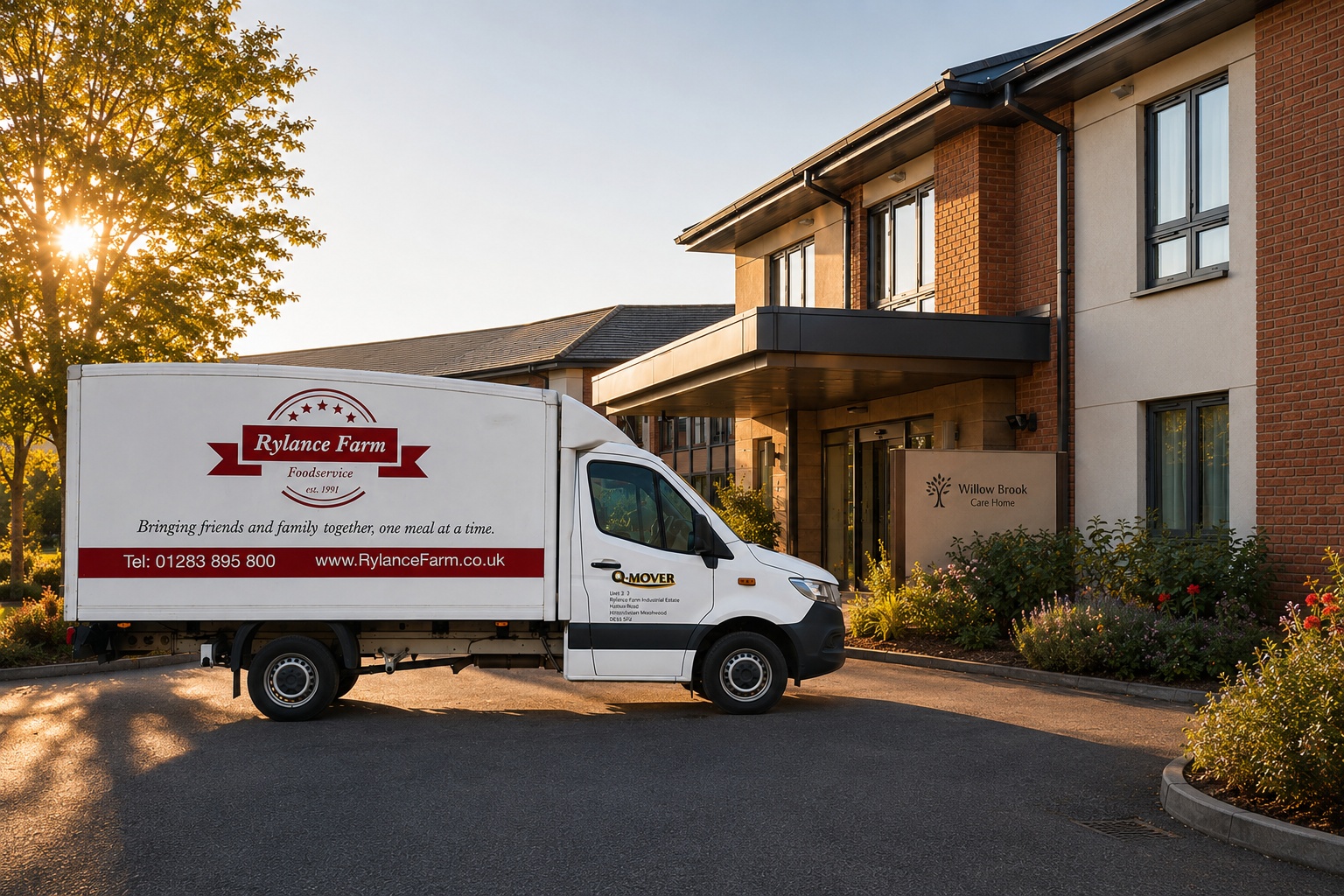
Our fleet of 30+ temperature-controlled vehicles is built to handle all four food temperature categories in a single load — separated by compartment and monitored throughout the journey to maintain food safety and product quality.
Temperatures are continuously monitored across each compartment. If a temperature were ever to fall outside its required range, the issue would be flagged before the vehicle reached you — not discovered when you unpack the crate.
One Delivery vs Several — What Actually Changes
The case for multi-temperature single delivery isn't theoretical. Switching from three or four suppliers to one usually shows up in the same operational places:
One delivery a day
- One delivery window to plan around — no kitchen staff held back for three different vans
- One delivery note to check and sign
- One monthly statement, one set of credits, one accounts contact
- One point of contact for stock, substitutions or problems
- Fewer vehicles at your loading bay, lower carbon footprint per drop
- Consistent service standards across every product category
Three or four deliveries
- Multiple delivery windows interrupting kitchen prep
- Multiple delivery notes, multiple sign-offs
- Multiple monthly statements, multiple invoices to reconcile
- Different call centres for different problems
- More vehicles, more emissions, more loading bay congestion
- Service standards vary supplier by supplier
Most care kitchens we onboard save 2–4 hours per week in admin and goods-in time after consolidating to single supplier delivery. That's time that goes back into menu prep, resident-facing care, or simply finishing the shift on time.
Food Safety Standards You Can Show Your Inspector
Multi-temperature delivery only works if the temperature control is genuine — not just a label on the side of the van. Our standards are built around the requirements of the Food Standards Agency, our STS accreditation, and our NHS framework and DPS obligations.
- Continuous temperature monitoring across every compartment of every vehicle, logged for audit
- Calibrated probe checks at depot loading and at customer delivery
- Driver-led HACCP-aligned procedures for temperature verification at every drop
- Documented cold chain integrity from manufacturer through to your kitchen door
- Vehicle pre-cooling before frozen and chilled loads are built
- Independently audited under our STS accreditation, renewed regularly
When a CQC inspector or environmental health officer asks how your food arrives at the correct temperature, the answer is documented, traceable and defensible.
Delivery Flexibility Built Around Your Kitchen
Care kitchens have their own rhythms. Breakfast service ends, residents go for activities, lunch prep starts — and somewhere in that window is your ideal delivery slot. We build daily routing around real kitchen patterns, not generic depot scheduling.
Multiple deliveries a week
Most care customers take three to six deliveries a week, sized around stock turnover, storage and menu rhythm. Smaller homes often run two; larger groups can take daily.
Sensible delivery windows
We work with your kitchen on a regular delivery window that suits your shift pattern — typically mornings, but adaptable where it helps.
Low minimum order values
Minimum order values are set sensibly — designed to work for smaller independent homes as well as multi-site groups.
One driver, one face
Routing builds driver familiarity over time. Your kitchen sees the same faces, who know your set-up and your team.
Group-site routing
Multi-site groups can be served as a coordinated route with sequenced delivery windows across sites — one supplier relationship across the whole group.
Holiday and event support
Christmas, bank holidays, summer services and special events all planned in advance with your account team, with delivery schedules adjusted to suit.
Common Questions About Multi-Temperature Delivery
What temperature ranges do you operate?
Our vehicles handle four zones in a single load: frozen at −18°C, chilled at 0–5°C, fresh produce at 5–10°C, and ambient for dry goods and non-food. Temperatures are monitored continuously and logged for audit.
How do we know products arrived at the correct temperature?
Temperature checks are recorded at depot loading and at customer delivery, with monitoring throughout the journey. Records are available on request — useful for your own HACCP records and any inspection enquiries.
What happens if a delivery is missing items or has a problem?
One supplier means one phone call. Our team handles substitutions, credits, replacements and short-dates directly — no call-centre routing, no waiting for a regional manager. Issues are flagged at the point of delivery and resolved the same day where possible.
How often will you deliver?
That depends on your kitchen's needs. Most care customers take three to six deliveries a week. Smaller homes often run two; larger groups can take daily. We'll work with your chef and catering manager on the right rhythm.
Can you deliver to multi-site care home groups on one schedule?
Yes. Multi-site groups can be served as a coordinated route across the Midlands and Yorkshire, with sequenced delivery windows across sites and one supplier relationship across the whole group.
What's the minimum order value?
Minimum order values are set sensibly and designed to work for smaller independent homes as well as multi-site groups. Call us to discuss what works for your kitchen.
Do you carry non-food alongside food?
Yes. Packaging, cleaning supplies, disposables and paper goods all travel in the ambient compartment alongside dry food — so non-food doesn't need its own separate supplier or delivery.
What if our home has a small loading area?
Most care homes have constrained access. Our vehicles range in size from large refrigerated lorries down to smaller vans, and routing accounts for tight loading bays, narrow streets and lift-only access where needed.
One Supplier. One Delivery. One Phone Call When You Need Us.
If you'd like to talk through how multi-temperature delivery could simplify your kitchen and your office, we'd be glad to hear from you. A 30-minute call is the easiest way to find out how it would work for your home.
You can also read our full care home offer or about our NHS framework approval.
9am–5pm · Sunday to Friday